
English| EUR
Suggested for you
More currencies
Choose a language
Marco Island's position at the northern edge of the Ten Thousand Islands creates a convergence zone where Gulf currents deposit shells from mangrove estuaries, seagrass beds, and offshore reefs. The beaches here yield a mix common to Southwest Florida—calico scallops, lightning whelks, fighting conchs—plus occasional rarities that draw collectors from across the country. Knowing what to look for changes how you search.
Quick answer
Marco Island beaches are home to more than forty shell species, with calico scallops, coquinas, fighting conchs, lightning whelks, and olive shells appearing most frequently along the tide line. Tigertail Beach and the sand flats at its northern lagoon produce the highest diversity, especially after winter storms when Gulf currents push deeper-water species—including the prized junonia—onto the sand. Live-shell collection is prohibited; only empty shells may be taken.
The shells that wash up on Marco Island reflect three distinct marine habitats within a few miles of shore. Calico scallops and coquinas come from the sandy shallows just beyond the surf zone, their bright patterns—pink, orange, purple—still vivid weeks after the animal has died. Lightning whelks and tulip shells arrive from deeper Gulf waters, their heavy spirals polished smooth by tumbling in the current. Fighting conchs, with their flared lips and creamy interiors, live in the seagrass beds that line the island's eastern shore and drift west during storm surge. Marco Island shell types also include less common species that make shelling here a pursuit rather than a stroll. The junonia—a pale, spotted cylinder no longer than your palm—is the most famous rarity, typically found only after hurricanes or northeasters dislodge it from depths beyond sixty feet. Alphabet cones, lions paws, and Scotch bonnets appear a few times each season, usually at Tigertail Beach's northern lagoon where tidal shifts concentrate shells in narrow bands. The key is to walk the wrack line at low tide, when the previous high water has left its deposit undisturbed. Identifying shells in the field becomes easier once you learn the handful of families that dominate local beaches. Bivalves—scallops, coquinas, ark shells—always come in mirror-image pairs, though you'll rarely find both halves intact. Gastropods—whelks, conchs, cones—grow in a single coiling spiral, with the opening on the right when the point faces up. Olive shells are small, glossy, and cylindrical; augers are long and narrow with a grooved surface. Each species occupies a specific niche in the underwater landscape, and their presence on the beach is a snapshot of the Gulf floor a few hundred yards out. Collection rules are strict and enforced by Florida Fish and Wildlife officers who patrol Collier County beaches regularly. Live shells—those still containing the animal—must be returned to the water immediately. Sand dollars, sea urchins, and starfish are also protected whether alive or dead. The daily parking fee at Tigertail Beach includes access to the self-guided shelling trail, which runs along the lagoon's northern edge where shell diversity peaks during the two hours before and after low tide.
“The junonia remains the most sought-after find on Marco Island, appearing only when deep Gulf storms dislodge it from offshore ledges.”
The variety of shells found on Marco Island originates from two distinct classes of mollusks: gastropods and bivalves. Understanding these biological classifications helps shell enthusiasts identify their finds along the shoreline.
These organisms, such as whelks and olives, belong to the class Gastropoda and typically feature a coiled, asymmetrical shell structure. They use a muscular foot to move across the sandy substrate.
Bivalves, including clams, cockles, and scallops, are members of the class Bivalvia and are defined by two matching shell halves held together by a hinge ligament. These mollusks are primarily filter feeders that reside in or on the sediment.
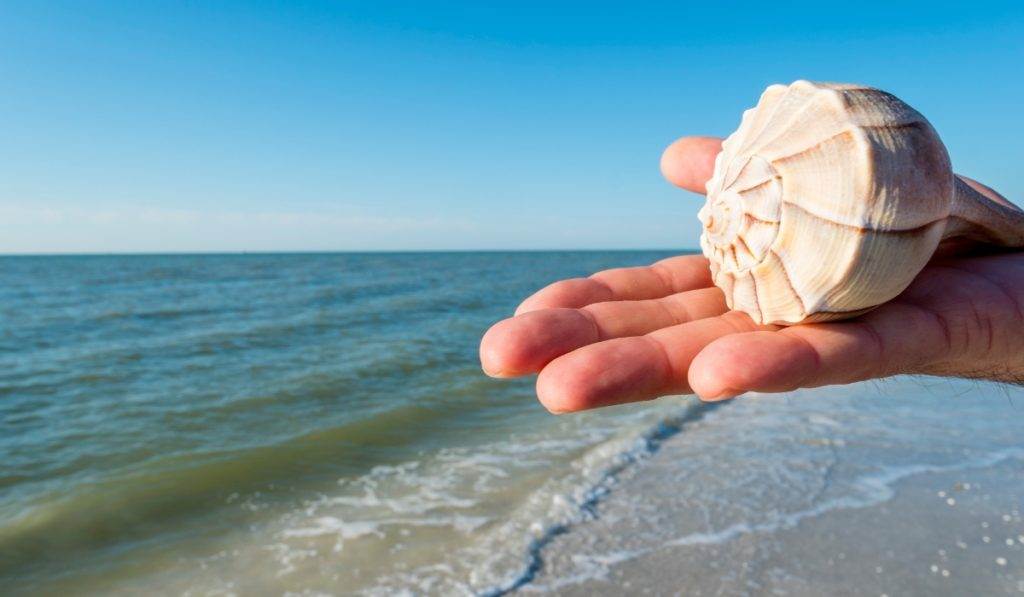
The lightning whelk is one of the few species where the shell opening is on the left side, a trait known as sinistral coiling. This gastropod is a predatory mollusk that feeds on other bivalves.
The lettered olive is a sleek, cylindrical gastropod that uses a thin mantle to keep its shell polished and free of debris. Its name comes from the tent-like markings on its surface that resemble letters.
Calico scallops are small, colorful bivalves that wash up frequently after storms. Unlike many other bivalves, they can use their adductor muscles to propel themselves through the water by clapping their valves together.
The Florida fighting conch is a gastropod named for the way its foot is used to propel itself aggressively when disturbed. These shells often feature a flared, thick lip once the mollusk has reached maturity.
To maximize your chances of finding diverse shell types, prioritize visiting during low tide and within the 07:00–10:00 arrival window. This timeframe minimizes competition from other collectors and provides the first access to shells deposited by the receding tide.
Cool, 65°F to 75°F; ideal for walking. The lower water temperatures and stronger winter currents often deposit more shells on the shore.
Warm, 75°F to 85°F; peak shelling windows. These transitional periods often feature favorable tides and less volatile weather patterns.
Hot, 85°F to 90°F; humid with frequent afternoon storms. Be prepared for higher visitor numbers and intense heat during midday hours.
—; the most productive period. Arriving early during the week allows for less disturbed sand and better collection conditions.
Verdict: The best opportunity to find shells occurs during weekday mornings, ideally arriving at 07:00 during the cooler months of April or October.
Marco Island's ecosystem depends on responsible shell collection practices. Follow local regulations to protect live mollusks and preserve the beaches for future visitors.
Tigertail Beach provides public access to the shorelines where various Marco Island shell types are found. The facility operates on a consistent schedule throughout the week.
Tigertail Beach serves as the primary public access point for finding various shell types on Marco Island. The beach is located at 480 Hernando Dr, Marco Island, FL 34145, and is most easily accessed by personal vehicle or taxi.
Follow FL-951 S to Marco Island, turn onto San Marco Rd, then proceed to Hernando Dr
Direct service to 480 Hernando Dr
Access via the designated public beach entry paths at Tigertail Beach
Arrive during the best arrival window of 07:00–10:00 to secure parking and beat the crowds during peak hours. Please note that a daily parking fee of 10 USD applies for visitors at public beach access points.
Everything you need to know about marco island shell types
Visitors often discover lightning whelks, cockles, and augers while walking the shoreline. These marco island shell types are frequently deposited along the sandy beaches by tidal action. You may also encounter calico scallops and colorful coquinas in the wash. Arriving between 07:00 and 10:00 is recommended to beat the crowds and secure your spot. This optimal arrival window helps you explore the beach before the mid-day heat and peak visitor traffic. Please note that collecting live specimens is prohibited to protect the local ecosystem. Responsible shelling of marco island shell types ensures that these natural treasures remain available for future generations to admire. Shelling tours provide expert guidance to help identify unique finds that might otherwise be overlooked. Professional guides often share tips on where to look for specific marco island shell types based on current weather patterns. Low tide is generally the best time to explore the intertidal zone where a wider range of mollusks can be seen. Changes in tidal flow bring diverse marine life to the water's edge throughout the day. Parking is available at public beach access points for a fee of 10 USD. Be sure to arrive early, as spaces can fill up quickly during popular times. Bringing a mesh bag, sunscreen, and plenty of water will make your shelling excursion more comfortable. Wear water shoes to protect your feet while traversing the tidal flats in search of local seashell varieties.
Tour Prices
Read more GuideCustomer Reviews
Read more Tickets & tours10,000 Islands Boat Tours
Read more Tickets & toursBest Shelling Tours
Read more GuideIs Marco Island Good for Shelling?
Read more Tickets & toursSightseeing & Shelling Tours
Read more Tickets & toursPrivate Shelling Tours
Read more Tickets & toursDolphin & Shelling Tours
Read more